
13thJuly, 2026
Helium Versus Air Filled Balloons: Choosing the Right Design System
Helium and air filled balloons are not interchangeable versions of the same decoration. They behave differently, require different support and create different visual effects. Choosing the right system begins with what the design needs to do, how long it must last and where it will be installed.
What helium does well
Helium provides lift. It allows individual balloons to float, creates bouquets with vertical movement and can add lightness above tables or along a ceiling line. It is useful when the string itself is part of the look or when a design needs movement without a visible frame.
Float time varies with balloon size, material, treatment and environment. Small latex balloons generally have less useful float time than larger ones. Foil balloons often retain lift longer, but valves and seams still need proper handling. A professional decorator selects sizes and inflation timing for the actual event window.
What air filled designs do well
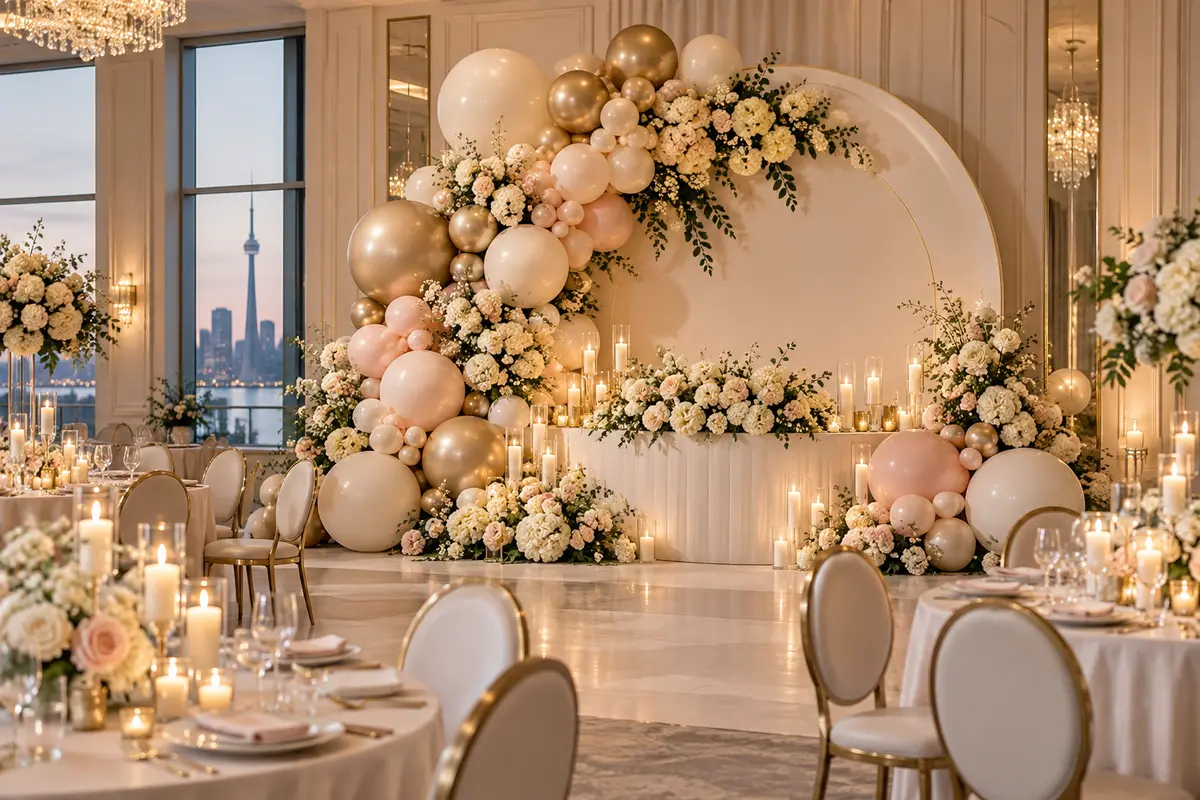
Air filled balloons do not float, so they rely on frames, lines, bases or attachment systems. That makes them ideal for garlands, arches, walls, columns and sculptural installations. They can often be prepared earlier and may remain presentable longer indoors because lift is not required.
Structure also gives the designer more control over shape. Air filled installations can wrap an arch, follow a staircase or create a dense photo backdrop without depending on strings and ceiling height.
“The right inflation method is a design decision. Helium creates lift and movement; air and structure create shape, density and control.”
GTA Balloons Design Team
Balloon SystemsCompare the full event plan
Helium costs, transport, inflation timing and ceiling conditions all affect the plan. Air filled work requires hardware, assembly time and suitable placement. A simple helium bouquet may be efficient for a small dinner, while a large photo moment is usually better served by a structured air filled installation.
Some events benefit from both. Floating balloons can add height while an air filled focal piece creates the main visual anchor. The combination should still feel intentional rather than filling every available space.
Safety matters with either system
Helium should never be inhaled. The Canadian Centre for Occupational Health and Safety explains that inert gases such as helium can displace oxygen and cause suffocation. Cylinders are pressurized equipment and should be secured and handled by informed adults. Broken or uninflated balloons must also be kept away from children.
No balloon should be released outdoors. Weights, secure structure and responsible teardown keep materials contained and protect surrounding spaces.
Choose according to purpose
- Use helium when lift and floating movement are essential.
- Use air and structure for defined shapes and photo walls.
- Confirm the required display duration.
- Consider ceiling height, transport and setup access.
- Plan safe cylinder handling and complete cleanup.
Safety source: Read the CCOHS guidance on simple asphyxiants and compressed gases.
Helium is best when a design needs lift, while air filled systems are best when it needs a controlled architectural shape. Neither method is automatically more professional.
A decorator should recommend the system that supports the event duration, venue, budget and visual goal while keeping handling and cleanup responsible.